Dwi Wanna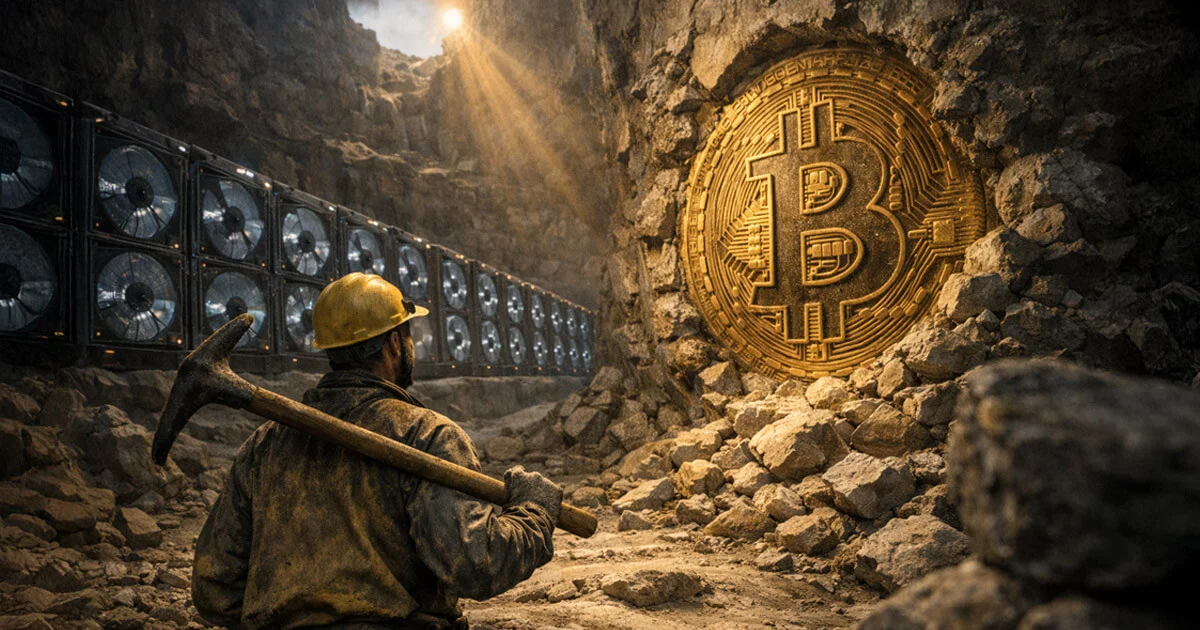
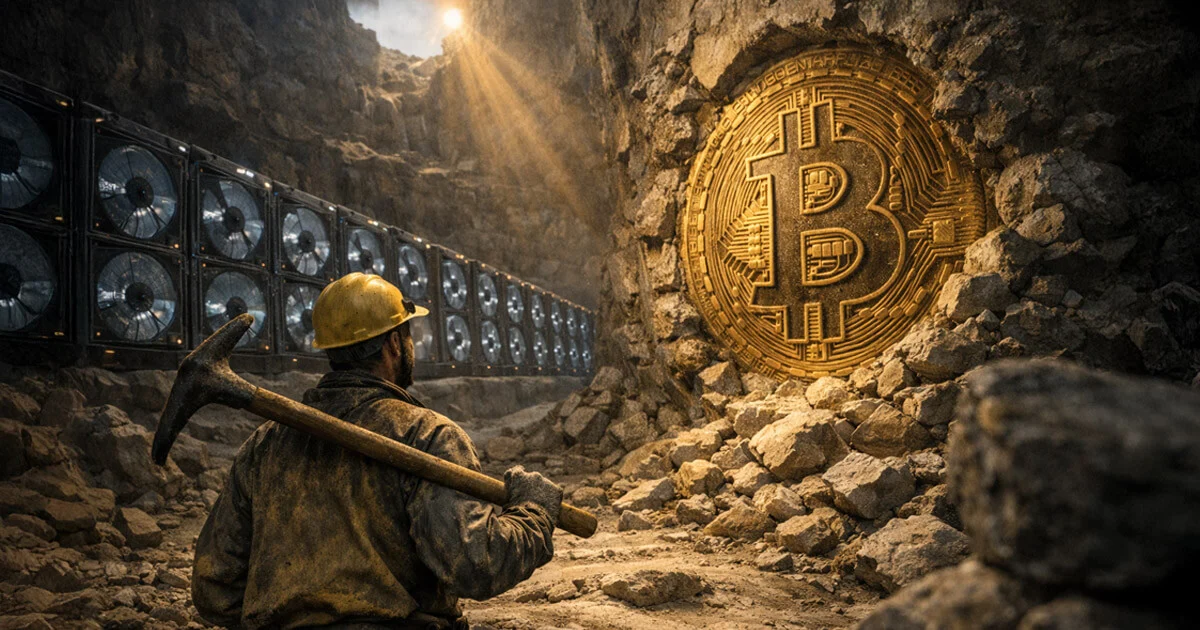
The global cryptocurrency market reached a definitive milestone on March 9, when the circulating supply of Bitcoin officially surpassed 20 million coins. This event marks the entry of 95% of the total projected supply into the hands of investors and holders, leaving fewer than one million coins to be discovered over the next 116 years. The milestone was achieved at block height 940,000, a block successfully validated and added to the blockchain by the mining pool Foundry USA.
While the first 20 million Bitcoin took approximately 17 years to produce—dating back to the network’s inception in January 2009—the remaining 5%, consisting of roughly one million BTC, will be issued at a progressively slower rate. Due to the network’s programmed "halving" events, the final fractions of the currency, known as satoshis, are not expected to be fully issued until the year 2140. This mathematical certainty is the cornerstone of Bitcoin’s value proposition, yet it simultaneously introduces a complex economic challenge regarding the long-term sustainability of the network’s security.
The Chronology of Digital Scarcity
The journey to 20 million coins began on January 3, 2009, when the pseudonymous creator Satoshi Nakamoto mined the "Genesis Block." At that time, the block subsidy was set at 50 BTC per block, with a new block produced roughly every ten minutes. This high issuance rate was designed to incentivize early adopters and distribute the currency widely during its nascent stages.

The Bitcoin protocol dictates that every 210,000 blocks—approximately every four years—the block reward is cut in half. The first halving occurred in November 2012, reducing the reward to 25 BTC. Subsequent halvings in 2016 (12.5 BTC), 2020 (6.25 BTC), and most recently in April 2024 (3.125 BTC) have systematically throttled the influx of new supply. This disinflationary mechanism ensures that while 95% of the supply is already active, the remaining 5% will be released over a period nearly seven times longer than the time it took to mine the first 20 million.
Industry leaders have characterized this milestone as the beginning of a new era for digital finance. Thomas Perfumo, chief economist at the Kraken exchange, noted that Bitcoin stands as one of the few truly scarce assets in a global economy often defined by monetary expansion. Simon Gerovich, founder of Metaplanet, suggested that the transition into the final million coins represents the true commencement of digital scarcity. These perspectives reflect a growing institutional consensus that views Bitcoin’s hard cap of 21 million as its most vital attribute.
Economic Pressures on the Mining Sector
The achievement of the 20-million-coin mark brings the economic reality of the mining industry into sharp focus. As the block subsidy—the primary source of income for miners—continues to diminish, the operational margins for securing the network are tightening.
Data from the Hashrate Index reveals that "hashprice," a metric measuring the daily revenue miners earn per unit of computational power, fell below $30 per petahash per second (PH/s) in late February. This decline was driven by a significant increase in network difficulty, a self-adjusting mechanism that ensures blocks are mined every ten minutes regardless of how much total computing power is active on the network. For many mining operations, a hashprice of $30 is near or below the breakeven point when accounting for electricity, hardware maintenance, and corporate overhead.

Currently, miners remain heavily reliant on the block subsidy. During the week leading up to the 20-million-coin milestone, transaction fees averaged only 0.0192 BTC per block. Compared to the 3.125 BTC subsidy, fees represent a negligible portion of total revenue. This imbalance highlights a critical transition period: for the network to remain secure in the coming decades, the fee market must expand to replace the vanishing block rewards.
The Strategic Pivot to Artificial Intelligence
Faced with diminishing returns from Bitcoin mining, several of the world’s largest publicly traded mining firms are diversifying their business models. This "AI pivot" involves repurposing the massive energy and cooling infrastructure originally built for Bitcoin mining to host high-performance computing (HPC) and artificial intelligence workloads.
Companies such as Core Scientific, Bitfarms, TeraWulf, CleanSpark, and Hut 8 have all announced significant shifts toward AI data center services over the past year. In total, these firms have secured more than $43 billion in contracts related to AI and HPC. This transition allows mining companies to stabilize their cash flows with long-term service contracts, reducing their exposure to the volatility of Bitcoin prices and the four-year halving cycles.
However, this migration of capital and hardware raises concerns about the future of Bitcoin’s hashrate. If the most well-capitalized miners find AI hosting more profitable than securing the blockchain, the total computational power dedicated to Bitcoin could stagnate or decline. While the network is designed to adjust its difficulty downward to accommodate less hashrate, a significantly lower hashrate could theoretically make the network more vulnerable to a 51% attack, where a single entity gains control of the majority of the network’s computing power.

The Security Debate: Subsidy vs. Fees
The long-term security of Bitcoin rests on the assumption that as the block subsidy approaches zero, transaction fees will rise to take its place. This is often referred to as the "Security Budget" problem. Critics and proponents alike are currently debating whether this transition is feasible.
Justin Drake, a prominent researcher at the Ethereum Foundation, has expressed skepticism regarding Bitcoin’s current fee structure. In recent public statements, Drake argued that if fee revenue does not grow exponentially, the incentive to secure the network will eventually erode. He warned that a compromise in Bitcoin’s security could have systemic implications for the entire cryptocurrency ecosystem, given Bitcoin’s role as a primary reserve asset.
The Bitcoin community’s counterargument is twofold. First, proponents believe that as Bitcoin adoption grows, the competition for limited block space will naturally drive up transaction fees. The emergence of new protocols like Ordinals and Runes, which allow for the creation of digital artifacts and tokens directly on the Bitcoin blockchain, has already demonstrated the potential for significant fee spikes.
Second, the "Layer 2" thesis suggests that while most small transactions will move to secondary networks like the Lightning Network, the main Bitcoin blockchain will serve as a high-value settlement layer for institutions, banks, and sovereign states. In this scenario, the fees for a single settlement transaction could be high enough to sustain a robust mining industry, even without a block subsidy.

Institutional Adoption and Future Implications
The 20-million-coin milestone coincides with a period of unprecedented institutional integration. The approval of spot Bitcoin exchange-traded funds (ETFs) in the United States and other jurisdictions has opened the door for trillions of dollars in professional capital to enter the market. Major corporations, most notably MicroStrategy and Japan’s Metaplanet, have adopted Bitcoin as a primary treasury reserve asset, further locking up the circulating supply.
This institutional demand creates a supply-demand imbalance. With 95% of the supply already mined and a significant portion held in "cold storage" by long-term investors and ETFs, the "liquid supply" available for trading is at historic lows. This scarcity is the primary driver of the "digital gold" narrative that has attracted conservative financial institutions.
As the network moves toward the final 1 million coins, the focus will shift from issuance to utility. The next century of Bitcoin’s existence will be defined not by how many coins are created, but by how the network evolves to handle global transaction volume and maintain its status as the world’s most secure decentralized ledger.
The milestone of 20 million coins is more than just a round number; it is a testament to the resilience of a protocol that has operated with near-perfect uptime for 17 years. It serves as a reminder that the experiment in decentralized, algorithmic monetary policy is entering its final chapter of distribution. Whether the network can successfully navigate the transition from a subsidy-based economy to a fee-based economy remains the most significant unanswered question in the digital asset space. The answer will determine if Bitcoin remains a permanent fixture of the global financial system or if its security model eventually requires a fundamental rethink.