Dwi Wanna
On November 17, 2024, the Bitcoin network reached a definitive milestone in its programmed monetary evolution as the total number of coins in circulation surpassed 19.95 million. This achievement signifies that more than 95% of the total 21 million supply cap has been successfully issued, marking the official commencement of what industry analysts are calling the "5% Era." While the milestone serves as a powerful validation of Bitcoin’s scarcity-driven value proposition, it simultaneously signals the start of the most operationally volatile and capital-intensive period for the global mining industry.
With less than 1.05 million BTC remaining to be produced over the next 115 years, the network is transitioning from a phase of high issuance and growth to one of extreme scarcity and subsistence on transaction fees. For the industrial-scale operators who secure the blockchain, the mathematical certainty of the "halving" mechanism—which reduces block rewards every four years—has created a looming revenue cliff that necessitates a total transformation of their business models.
The Chronology of Bitcoin’s Programmed Scarcity
The journey to the 95% threshold began on January 3, 2009, when the pseudonymous creator Satoshi Nakamoto mined the "Genesis Block." At that time, the block subsidy was set at 50 BTC per block, occurring approximately every ten minutes. This high rate of issuance was designed to incentivize early adopters and distribute the currency widely during its nascent years.

The protocol’s code dictates that this subsidy be reduced by 50% every 210,000 blocks, an event known as the "halving." The first halving occurred in November 2012, reducing the reward to 25 BTC. This was followed by the July 2016 halving (12.5 BTC) and the May 2020 halving (6.25 BTC). The most recent event, which took place in April 2024, brought the reward down to 3.125 BTC per block.
This geometric decay function means that while 95% of the supply was mined in just 15 years, the remaining 5% will take more than a century to extract. The final partial satoshi is not expected to be mined until roughly the year 2140. This timeline creates a unique economic environment where the asset becomes increasingly scarce on the open market, even as the cost to produce each new unit rises exponentially.
The Miner’s Paradox: Rising Difficulty Amid Falling Revenue
The transition into the "5% Era" is characterized by a phenomenon known as the "Miner’s Paradox." Historically, when the profitability of mining decreased, inefficient operators would shut down their machines, leading to a decrease in network difficulty and a recovery in margins for the survivors. However, recent on-chain data suggests this self-correcting mechanism is currently strained.
Industry metrics show that "Hashprice"—a measure of miner revenue per unit of processing power (hashrate)—recently plummeted to approximately $38.82 per petahash per second (PH/s) per day. This represents a 12-month low and a significant contraction from the $80 to $100 levels observed during previous market cycles. Despite this revenue compression, the total network hashrate has remained near all-time highs as miners deploy more efficient, next-generation ASICs (Application-Specific Integrated Circuits) to maintain their market share.

Total daily miner revenue has seen a corresponding decline, dropping from daily averages of over $40 million earlier in the year to approximately $37 million. This "arms race" for hashrate, combined with the reduced block subsidy, has placed miners in a vice. They must spend more on electricity and hardware to compete for a smaller pool of available Bitcoin, leading to a period of industry-wide consolidation where only the most well-capitalized firms can survive.
The Strategic Pivot: High-Performance Computing and AI
In response to the diminishing returns of pure-play Bitcoin mining, a significant segment of the industry is diversifying into Artificial Intelligence (AI) and High-Performance Computing (HPC). This shift represents a fundamental change in the identity of mining firms, moving them from "crypto-miners" to "energy infrastructure providers."
The logic behind this pivot is based on unit economics. The infrastructure required for Bitcoin mining—massive power allocations, specialized cooling systems, and high-security physical sites—is remarkably similar to what is needed for AI model training and data center operations. However, the revenue potential per megawatt-hour (MWh) for AI compute is currently estimated to be significantly higher than that of Bitcoin mining.
In a 2024 report, analysts at VanEck projected that if public Bitcoin miners diverted just 20% of their existing power capacity toward AI and HPC workloads, they could unlock an additional $38 billion in annual revenue. This has led to high-profile transitions:

- Bitfarms has announced plans to wind down certain underperforming mining operations to focus on AI compute facilities.
- Coreweave and Hive Digital have successfully retrofitted existing mining sites to accommodate GPU-based workloads for AI.
- Terawulf has integrated HPC capabilities into its zero-carbon mining operations, citing the need for revenue stability.
By operating as "hybrid" entities, these companies can use Bitcoin mining as a flexible load-balancing tool—mining Bitcoin when electricity prices are low or AI demand dips, and selling power back to the grid or focusing on AI during peak demand periods.
The Long-Term Security Challenge: The Fee Market
As the block subsidy continues to trend toward zero, the long-term security of the Bitcoin network becomes dependent on the "fee market." Satoshi Nakamoto’s original design envisioned that transaction fees would eventually replace the block subsidy as the primary incentive for miners to secure the ledger.
For this transition to be successful, demand for Bitcoin blockspace must remain consistently high. In 2023 and early 2024, the emergence of "Inscriptions" and "Runes"—protocols that allow users to embed data and create tokens directly on the Bitcoin blockchain—provided a glimpse into this future. These innovations led to brief periods where transaction fees accounted for more than 50% of total miner revenue.
However, the baseline demand for these features has proven volatile. Critics, including Ethereum Foundation researcher Justin Drake, have warned that if a robust and permanent fee market does not develop, the network’s "security budget" could shrink. A lower security budget means it would become cheaper for a malicious actor to perform a 51% attack on the network. Drake has argued that a failure to solve the long-term security budget issue could have systemic implications for the entire cryptocurrency ecosystem.

Conversely, proponents of the current model argue that as Bitcoin becomes a global settlement layer for high-value transactions, the sheer value of the settlements will naturally drive up transaction fees, ensuring the network remains the most secure computing chain in the world.
Institutional Adoption and the Scarcity Narrative
While miners face operational headwinds, the "5% Era" has strengthened the investment thesis for institutional holders. The approval of spot Bitcoin ETFs in the United States in early 2024 has led to a massive influx of capital from firms like BlackRock and Fidelity. For these investors, the 95% supply milestone is a "proof of concept" for Bitcoin’s hard-capped monetary policy.
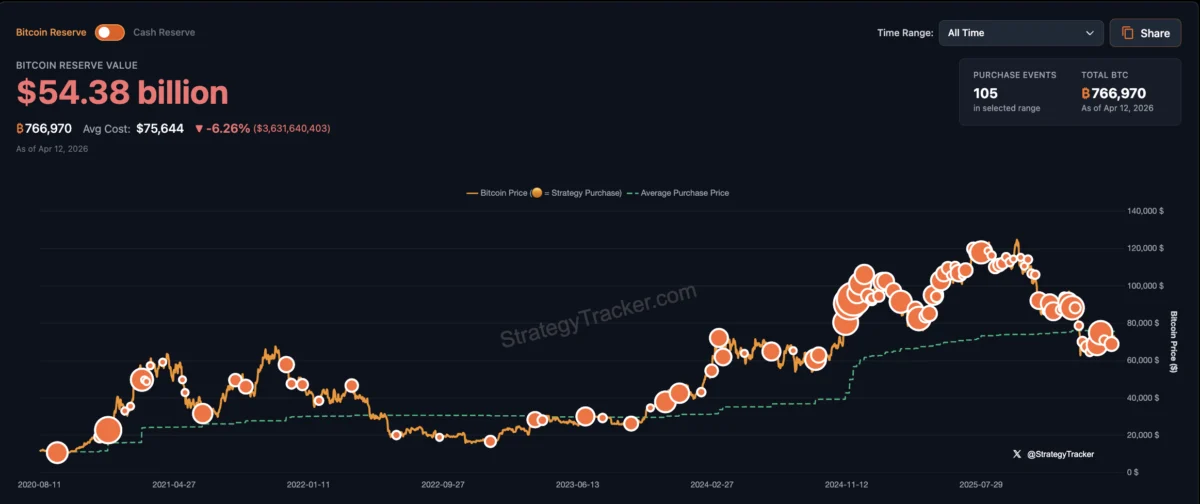
The scarcity narrative is increasingly being compared to gold. Gold has an estimated annual inflation rate of 1% to 2% as new supply is mined from the earth. Bitcoin’s current inflation rate is already lower than gold’s and will continue to drop every four years until it effectively hits zero. This programmatic certainty is a key driver for sovereign wealth funds and corporate treasuries, such as MicroStrategy, which view Bitcoin as a hedge against the debasement of fiat currencies.
The divergence between the "miner’s struggle" and the "investor’s triumph" is a hallmark of this new era. As the asset becomes more valuable and harder to produce, the barrier to entry for new miners rises, leading to a professionalization of the sector that mirrors traditional commodity markets like oil and gold.

Implications for the Next Century
The entry into the final 5% of Bitcoin’s supply marks the end of the "Gold Rush" phase of the network. The era where hobbyists could mine Bitcoin on home computers is long gone, replaced by a landscape of publicly traded conglomerates, geopolitical competition for hashrate, and sophisticated energy arbitrage.
The next 115 years will be defined by three critical factors:
- Energy Efficiency: The survival of mining operations will depend almost entirely on securing the lowest possible electricity costs and utilizing wasted energy sources, such as flared natural gas or excess renewable power.
- Geopolitical Distribution: As Bitcoin becomes a more significant part of the global financial system, nations may begin to view hashrate as a strategic asset, leading to state-sponsored mining operations to ensure domestic access to the network.
- Layer 2 Evolution: To support high transaction fees on the base layer without pricing out average users, the development of Layer 2 solutions like the Lightning Network will be essential. These layers will handle small, frequent transactions, while the main Bitcoin blockchain serves as the high-security settlement layer for the global economy.
In summary, the 19.95 million coin milestone is not a finish line, but a transition point. The "5% Era" represents the ultimate test of Bitcoin’s economic incentives. While the path ahead for miners is fraught with "dangerous" margin compression and technical challenges, the underlying protocol continues to function exactly as intended: a decentralized, immutable, and increasingly scarce form of digital money. The struggle to extract the final million coins will likely define the technological and financial landscape of the 21st century.